
Brain-healthy Habits for Men
PR Newswire
ALBANY, Ga., June 16, 2026
ALBANY, Ga., June 16, 2026 /PRNewswire/ — This June as part of Men’s Health Month, The Peanut Institute is sharing a variety of ways men can proactively protect and boost their brain.
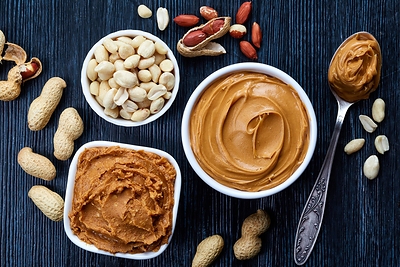
“Since men are often less likely to seek preventive medical care, it can be especially important to focus on steps that support long-term brain health. Managing blood pressure and cholesterol and addressing other cardiovascular risk factors can all help reduce the risk of cognitive decline and dementia later in life,” says Dr. Samara Sterling, a nutrition scientist and research director for The Peanut Institute. “Regular mental activity, heart health and smart nutrition are a few of the areas men should focus on.”
Brain-healthy Habits
A healthy brain starts with healthy habits. Following are six ways men can stay sharp.
- Prioritize Sleep
No matter the age, consistent sleep is important since it supports memory, attention, problem-solving and protects against cognitive decline and Alzheimer’s disease. In fact, recent research has found that the brain does vital housekeeping during the night. While the body is at rest, the brain recharges, reorganizes and removes toxic waste that has accumulated throughout the day.1
- Exercise the Mind
Ensuring the brain remains active can help support memory and thinking skills. To exercise this important muscle, try an activity that’s unfamiliar. Consider chess since it engages both the left and right hemispheres of the brain or card games like bridge, poker, canasta and gin rummy that work memory and require quick-thinking and decision making. Crossword puzzles, reading a book, learning a musical instrument, taking up a new hobby, or getting involved in the community are other ways to stimulate the brain.
- Work Up a Sweat
People who are physically active are more likely to keep their minds sharp. A number of studies have found that the parts of the brain that control thinking and memory have greater volume in people who exercise.2 Incorporate regular exercise into the day and consider trying different activities that require brain power to learn new techniques or movements. For example, tai chi is an ancient martial art that has evolved into a popular mind-body exercise. Learning new dance steps is another way to move the body while simultaneously engaging the brain.
- Help the Heart
Heart health is especially important because men are more likely to experience conditions that can raise their risk for heart disease, including high blood pressure, high cholesterol, obesity and diabetes – all of which have been linked to cognitive decline. The good news is that healthy brain habits also benefit the heart. Regular aerobic exercise and strength training are musts, along with quitting smoking and following a heart-smart diet.In terms of diet, peanuts have long been recognized as a heart-healthy food because they are a good source of monounsaturated fats, which have been linked to lowering blood pressure levels.3 One study from Australia found consuming lightly salted peanuts twice a day before meals led to weight loss, lowered blood pressure and improved fasting glucose levels.4
Peanuts can also help control cholesterol. High LDL (or ‘bad’) cholesterol can lead to plaque build-up in the arteries. Peanuts are naturally cholesterol free and have mono- and polyunsaturated fats that help raise levels of HDL (aka ‘good’) cholesterol.5 Peanuts also help with weight management. Swapping unhealthy snacks for peanuts or peanut butter can support decreases in body mass index (BMI) and improve overall health.6 And, eating low glycemic index foods (like peanuts and peanut butter) can significantly reduce the risk of type 2 diabetes, while also delivering a feeling of fullness.
- Eat Brain-fortifying Foods
The saying “food is medicine” holds true when it comes to brain health, so consuming brain-friendly foods like nuts, seeds, salmon, beans, blueberries, leafy greens, avocados and red cabbage make sense. Peanuts and peanut butter are especially smart choices because they’re packed with 19 essential vitamins and minerals – many of which benefit the brain. A recent study of more than 6,000 adults showed that higher consumption of nuts eaten as part of a brain-healthy diet, called the MIND diet, was associated with a 30 percent reduced risk of cognitive impairment.7 Peanuts also contain niacin, vitamin E and resveratrol – nutrients and compounds that have been linked to supporting cognitive function and healthy brain aging.
- Stress Less
Stress isn’t just difficult to handle, it also impacts the brain. Prolonged exposure to stress hormones can cause inflammation and dysfunction in the brain that affect memory, cognition, attention and mood. Deep breathing, meditation, exercise, outdoor walks and healthy foods are tools to bring down stress levels.Peanuts may help support a healthier stress response thanks to compounds like p-coumaric acid, an antioxidant that has been associated with stress-reducing effects in research. In a six-month study conducted by the University of Barcelona, young adults who consumed a daily serving of peanuts or peanut butter experienced improvements in memory and reductions in stress, anxiety and depression.8 With a combination of healthy fats, protein, fiber, vitamins and minerals, peanuts and peanut butter offer benefits for both brain and body health.
Think Peanut Power
Peanuts are a small but mighty legume and can deliver cognitive support for men at every age.
A 2019 review of 19 experimental studies found those who ate peanuts and other nuts tended to perform better on cognitive tests and experience less decline over time.9 Nut consumption also showed a protective effect on cognitive function.9 A higher intake of legumes and nuts has also been linked to better overall cognition.10 Eating just 10g of nuts per day is associated with a 40% lower likelihood of poor cognitive function.11
In terms of Alzheimer’s disease, although fewer men than women are diagnosed with it, men who develop the condition often face more serious outcomes. Factors such as underlying heart health issues, delayed detection and a tendency to seek medical care less often may all play a role. Fortunately, peanuts contain high levels of niacin and are a good source of vitamin E – two nutrients that have long been known to protect against Alzheimer’s disease and age-related cognitive decline. One study found that niacin intake from foods was associated with a slower annual rate of cognitive decline and a 70 percent lower risk of Alzheimer’s.12
“As the prevalence of Alzheimer’s increases around the world, both men and women should consider incorporating brain-healthy habits into their daily life,” says Sterling. “Keeping your mind and body active and engaged and adding ‘brain foods’ into your diet are a few easy steps to take.”
For more health news and recipe ideas that incorporate peanuts and peanut butter, visit PeanutInstitute.com. The Peanut Institute also provides news and updates on Facebook, Twitter, Instagram, LinkedIn and Pinterest.
Based in Albany, Ga., The Peanut Institute is a non-profit organization supporting nutrition research and developing educational programs to encourage healthful lifestyles that include peanuts and peanut products. The Peanut Institute pursues its mission through research programs, educational initiatives and the promotion of healthful lifestyles to consumers of all ages. As an independent forum, The Peanut Institute is uniquely positioned to work with all segments of the food industry, the research community, academia, consumer organizations and governmental institutions.
Sources
1. Eugene AR, Masiak J. The Neuroprotective Aspects of Sleep. MEDtube Sci. 2015 Mar;3(1):35-40. PMID: 26594659; PMCID: PMC4651462.
2. Colcombe SJ, Erickson KI, Scalf PE, Kim JS, Prakash R, McAuley E, et al. Aerobic exercise training increases brain volume in aging humans. J Gerontol A Biol Sci Med Sci. 2006;61:1166–70. doi: 10.1093/gerona/61.11.1166. [PubMed] [CrossRef] [Google Scholar]
3. Kris-Etherton PM, Pearson TA, Wan Y, et al. High-monounsaturated fatty acid diets lower both plasma cholesterol and triacylglycerol concentrations. Am J Clin Nutr. 1999;70(6):1009–1015.
4. Petersen KS, Murphy J, Whitbread J, Clifton PM, Keogh JB. The Effect of a Peanut-Enriched Weight Loss Diet Compared to a Low-Fat Weight Loss Diet on Body Weight, Blood Pressure, and Glycemic Control: A Randomized Controlled Trial. Nutrients. 2022; 14(14):2986. https://doi.org/10.3390/nu14142986
5. Lokko P, Lartey A, Armar-Klemesu M, Mattes RD. Regular peanut consumption improves plasma lipid levels in healthy Ghanaians. Int J Food Sci Nutr. 2007;58(3):190–200. doi:10.1080/09637480701198067.
6. Moreno JP, Mohammed A, Moore CE, Johnston C. Benefits of a snacking intervention as part of a school-based obesity intervention for Mexican American children. Journal of Applied Research on Children: Informing Policy for Children at Risk 2015;6(2).
7. Wenjian Lin, Xiaoyu Zhou, Xueyuan Liu, Association of adherence to the Chinese version of the MIND diet with reduced cognitive decline in older Chinese individuals: Analysis of the Chinese Longitudinal Healthy Longevity Survey, The Journal of nutrition, health and aging, Volume 28, Issue 2, 2024, 100024, ISSN 1279-7707, https://doi.org/10.1016/j.jnha.2023.100024.
8. Isabella Parilli-Moser, Inés Domínguez-López, Marta Trius-Soler, Magda Castellví, Beatriz Bosch, Sara Castro-Barquero, Ramón Estruch, Sara Hurtado-Barroso, Rosa M. Lamuela-Raventós. Consumption of peanut products improves memory and stress response in healthy adults from the ARISTOTLE study: A 6-month randomized controlled trial. Clinical Nutrition. 2021 Sept;40(11). DOI:https://doi.org/10.1016/j.clnu.2021.09.020. https://www.clinicalnutritionjournal.com/article/S0261-5614(21)00437-4/fulltext
9. Chen X, LluZ, Sachde PS, Kochan NA, O’Leary F, Brodaty H. Association of Dietary Patterns with Cognitive Function and Cognitive Decline in Sydney Memory and Ageing Study: A Longitudinal Analysis. JAcad Nutr Diet. 2022 May;122(5):949-960.e15. dol: 10.1016/].jand.2021.10.018. Epub 2021 Oct 22. PMID: 34688967.
10. Assmann KE, Adjibade M, Herberg S, Galan P, Kesse-GuyotE. Unsaturated Fatty Acid Intakes During Midlife Are Positively Associated with Later Cognitive Function In Older Adults with Modulating Effects of Antioxidant Supplementation. J Nutr. 2018 Dec 1;148(12):1938-1945. doi: 10.1093/jn/nxy206.1. PMID: 30517725.
11. Bruno Bizzozero-Peroni, Rubén Fernández-Rodríguez, Vicente Martínez-Vizcaíno, Miriam Garrido-Miguel, Maria Medrano, Estela Jiménez-López, Arthur Eumann Mesas, Nut consumption is associated with a lower risk of depression in adults: A prospective analysis with data from the UK Blobank cohort. Clinical Nutrition, Volume 42, Isse 9, 2023. Pages 1728-1736. ISSN 0261-5614. 1. https://dol.org/10.1016/j.clnu.2023.07.020.
12. Morris MC, Evans DA, Bienias JL, Scherr PA, Tangney CC, Hebert LE, Bennett DA, Wilson RS, Aggarwal N. Dietary niacin and the risk of incident Alzheimer’s disease and of cognitive decline. J Neurol Neurosurg Psychiatry. 2004 Aug;75(8):1093-9. doi: 10.1136/jnnp.2003.025858. PMID: 15258207; PMCID: PMC1739176. https://pubmed.ncbi.nlm.nih.gov/15258207/
 View original content to download multimedia:https://www.prnewswire.com/news-releases/brain-healthy-habits-for-men-302801844.html
SOURCE The Peanut Institute


