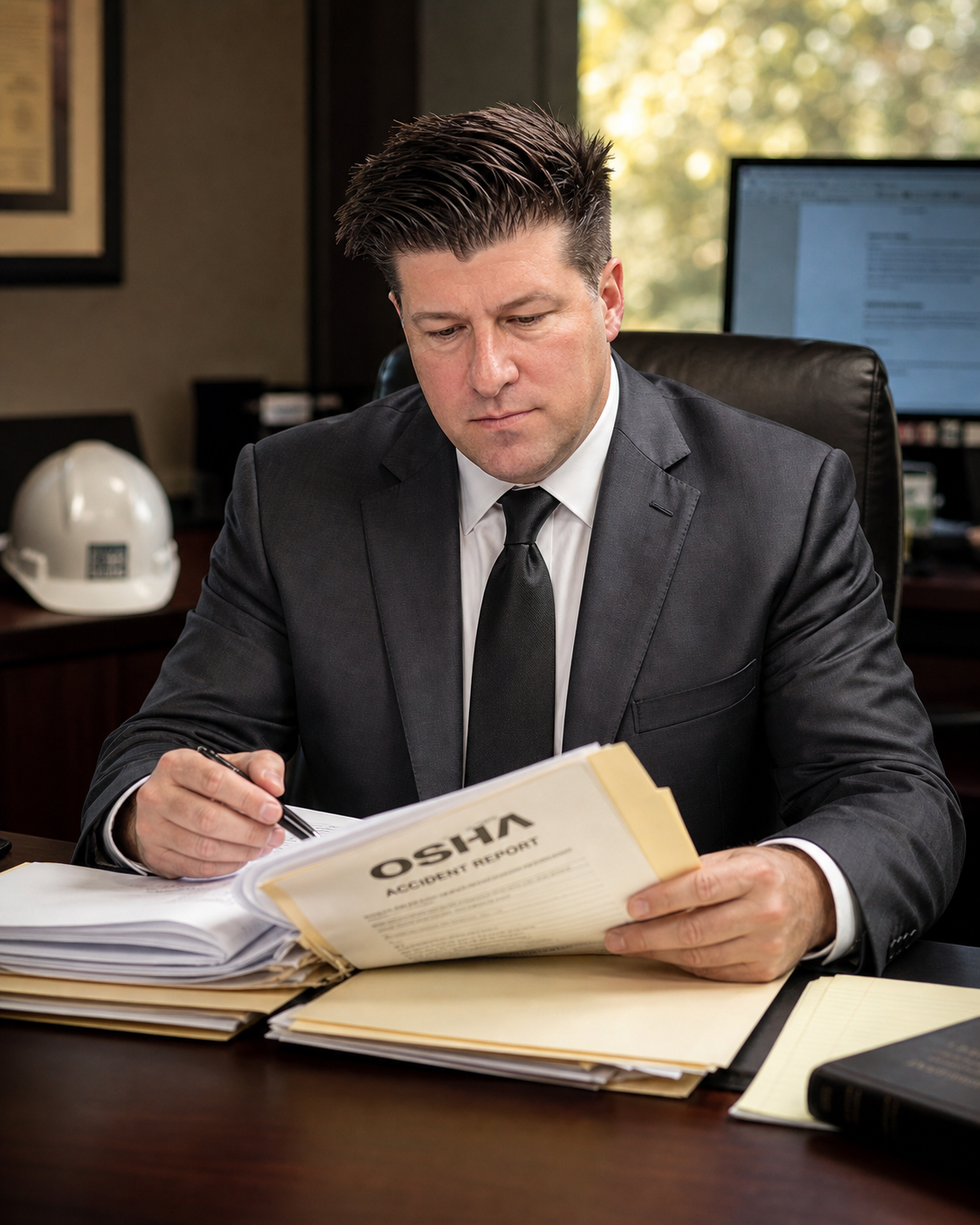
Scott DeSalvo forces corporate defendants to disclose driver identity only after a lawsuit is filed, and what that means for crash victims.
CHICAGO, IL, UNITED STATES, July 20, 2026 /EINPresswire.com/ — When a driver flees the scene of a crash, victims often assume the case is over before it starts. Chicago personal injury attorney Scott DeSalvo says that assumption is frequently wrong — but that closing the gap can require filing a lawsuit against a corporation that has no interest in helping.
DeSalvo, who has practiced personal injury law in Illinois for more than 25 years, is currently handling a matter in which a vehicle owned by a national rental corporation was involved in a rear-end collision. The occupants of the struck vehicle — a driver and three passengers returning home from a wedding — were injured. The operator of the rental vehicle left the scene.
The rental company possessed records identifying who had been given the vehicle. Obtaining that information, DeSalvo says, required litigation.
“A corporation that rents vehicles knows exactly who it handed the keys to. That information exists in a file somewhere,” said Scott DeSalvo, personal injury attorney and Trial Lawyers College graduate with over 25 years of experience helping Illinois injury victims. “When a company decides it would rather not share that file, the only tool that actually works is a lawsuit. Politeness does not open a filing cabinet. A court order does.”
The dynamic DeSalvo describes is not unique to one company or one case. In crashes involving rental fleets, commercial carriers, and vehicles owned by corporate entities, the injured person typically has no independent way to learn who was driving. Police reports may list a vehicle without a confirmed operator. Insurance carriers may decline to identify their insured. The information sits with the corporate owner, and the corporate owner has no legal obligation to volunteer it to someone who may later sue.
Illinois law provides mechanisms to compel that disclosure — but nearly all of them require a case to be on file. Pre-suit requests carry no enforcement power. Once a complaint is filed, discovery rules obligate parties to produce relevant records, and courts can impose consequences for failing to do so.
That gap between asking and compelling is where DeSalvo says many hit-and-run claims quietly die. A victim or a less aggressive representative sends letters, receives no substantive response, and eventually concludes the driver cannot be identified.
Illinois also imposes deadlines. Under the state’s statute of limitations, most personal injury claims must be filed within two years of the injury date. Time spent waiting on a corporation that has no intention of responding is time subtracted from that window.
“There are lawyers who will accept a corporate ‘no’ as the end of the conversation. I am not one of them,” DeSalvo said. “If a company would rather litigate than tell an injured family who hit them, then we litigate. That is the job. Injury victims do not need someone to relay bad news politely — they need someone willing to make the other side answer.”
DeSalvo notes that the willingness to file suit changes the posture of a claim well before any courtroom appearance. Corporate defendants that ignore pre-suit correspondence often respond substantively once served, because the obligations and the consequences change.
Beyond his casework, DeSalvo maintains free educational resources at desalvolaw.com covering how injury claims work in Illinois, including material on evidence preservation, insurance company practices, and claim deadlines. All resources are written by DeSalvo personally and available without registration or email capture — part of a stated commitment to helping injury victims understand their rights whether or not they hire his firm.
Anyone injured by a driver who fled the scene, DeSalvo says, should assume the case is viable until a lawyer with subpoena power has actually looked at it — not before.
The matter described remains in active litigation. No details identifying the parties, the venue, or the specific allegations are disclosed here. Prior results do not guarantee or predict a similar outcome in any future case.
Scott DeSalvo represents injury victims throughout Chicago, Oak Brook, and the surrounding Illinois communities. Consultations are free. More information is available at desalvolaw.com.
About Scott DeSalvo
Scott DeSalvo is a personal injury attorney with over 25 years of experience representing injury victims throughout the Chicago metropolitan area, including Oak Brook, Cicero, and surrounding communities. A graduate of the Trial Lawyers College, DeSalvo personally authors all client resources — including detailed guides, calculators, and educational materials available free at desalvolaw.com — with a commitment to helping injury victims understand their rights whether or not they choose to hire him. He was named Best Personal Injury Lawyer in Oak Brook 2026 by BusinessRate and has been selected by the American Institute of Personal Injury Attorneys as one of Illinois’ 10 Best Attorneys for Client Satisfaction 2026.
Scott DeSalvo
The Law Office of Scott D. DeSalvo, LLC
+1 312-895-0545
email us here
Visit us on social media:
LinkedIn
Instagram
Facebook
YouTube
TikTok
X
Other
Million Dollar Injury Cases
Legal Disclaimer:
EIN Presswire provides this news content “as is” without warranty of any kind. We do not accept any responsibility or liability
for the accuracy, content, images, videos, licenses, completeness, legality, or reliability of the information contained in this
article. If you have any complaints or copyright issues related to this article, kindly contact the author above.

Media gallery