
NEW YORK, NY, September 2, 2026 (EZ Newswire) — The electric toothbrush industry has become increasingly good at measuring movement. Modern devices can track time, pressure and angle, while motion sensors estimate which parts of the mouth a user has covered. These measurements can reveal a great deal about the brushing process, but they still say relatively little about the condition of the teeth when that process is complete. A person can brush for the recommended two minutes and repeatedly clean the easiest surfaces while missing the inside of the teeth, the gumline or the back molars. The timer confirms that the brush was running; the coverage map estimates where it moved. Neither directly shows what remains on the tooth surface.
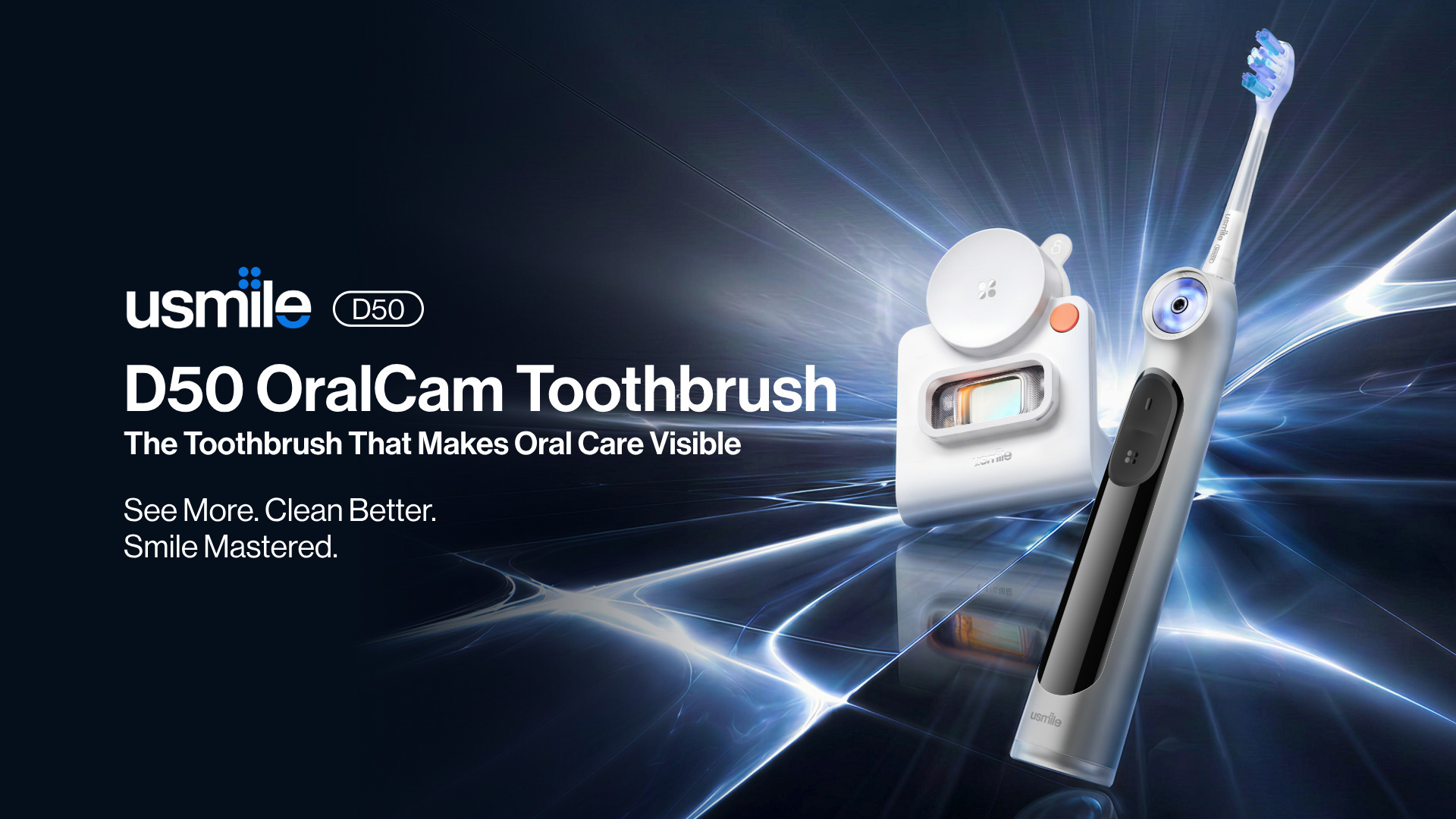
For usmile, that gap became the starting point for a six-year effort to build visual intelligence into everyday oral care. The company has developed a system that combines close-range oral imaging, fluorescence-based illumination, tooth-level image recognition, inertial sensing and on-device computing. Its most complete application to date is the D50 OralCam Toothbrush, but the underlying project extends beyond putting a camera into a single product. The technical objective is to capture visual information from inside the mouth, determine where that information came from and connect it to an action the user can take.
“People generally know whether they brushed for two minutes,” said Jason, product manager for the usmile D Series. “What they usually cannot tell us is where they consistently miss or whether the result matches the effort they put in.” During product research, users were asked to brush as usual and then identify which areas they believed had been cleaned effectively. Optical images captured afterward frequently showed plaque-associated signals in unexpected locations, particularly on the inside surfaces and around the back molars. The discrepancy did not make timers or motion tracking irrelevant, but it exposed their limitation: they measure the behavior surrounding brushing rather than the visible result.
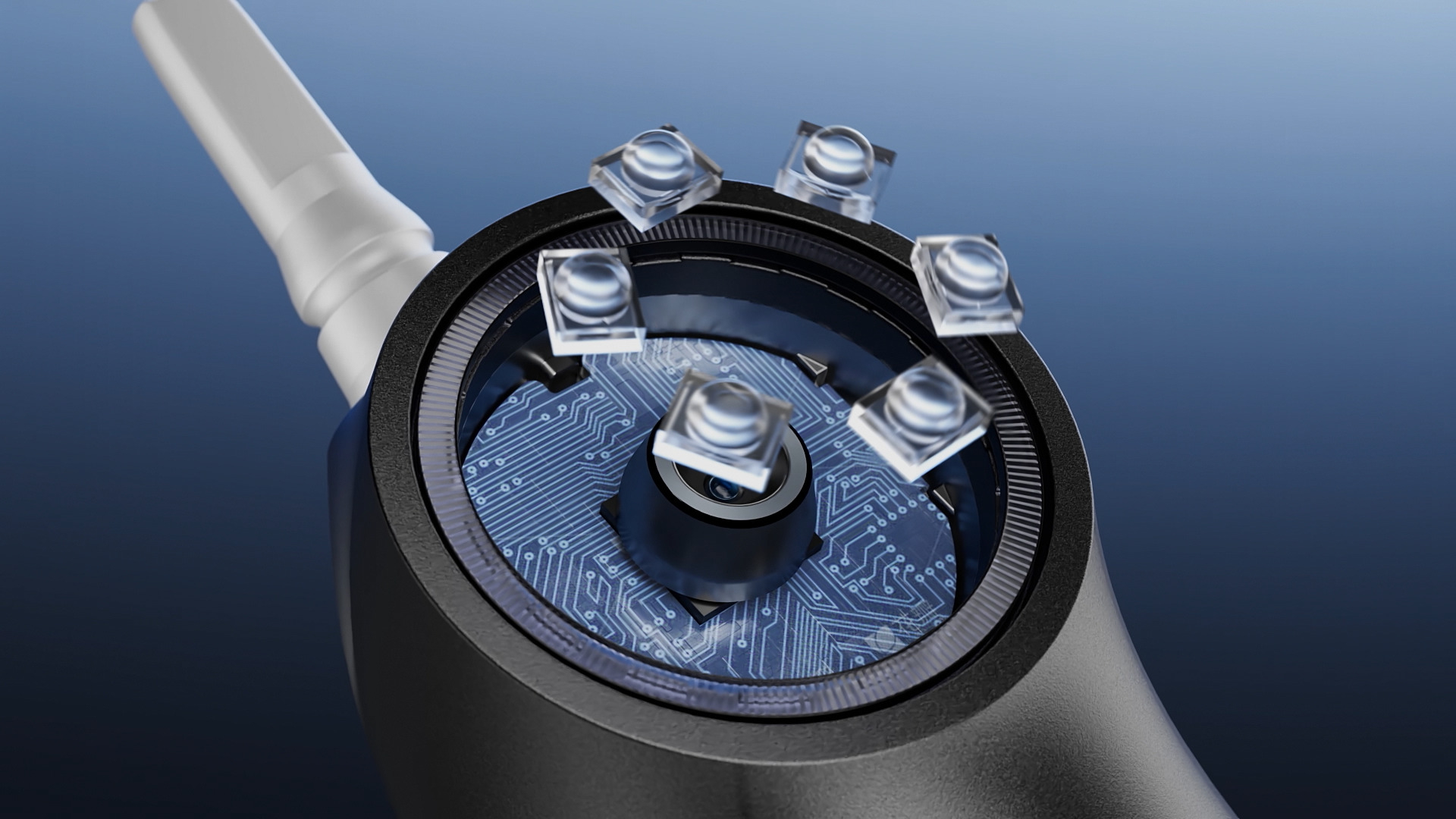
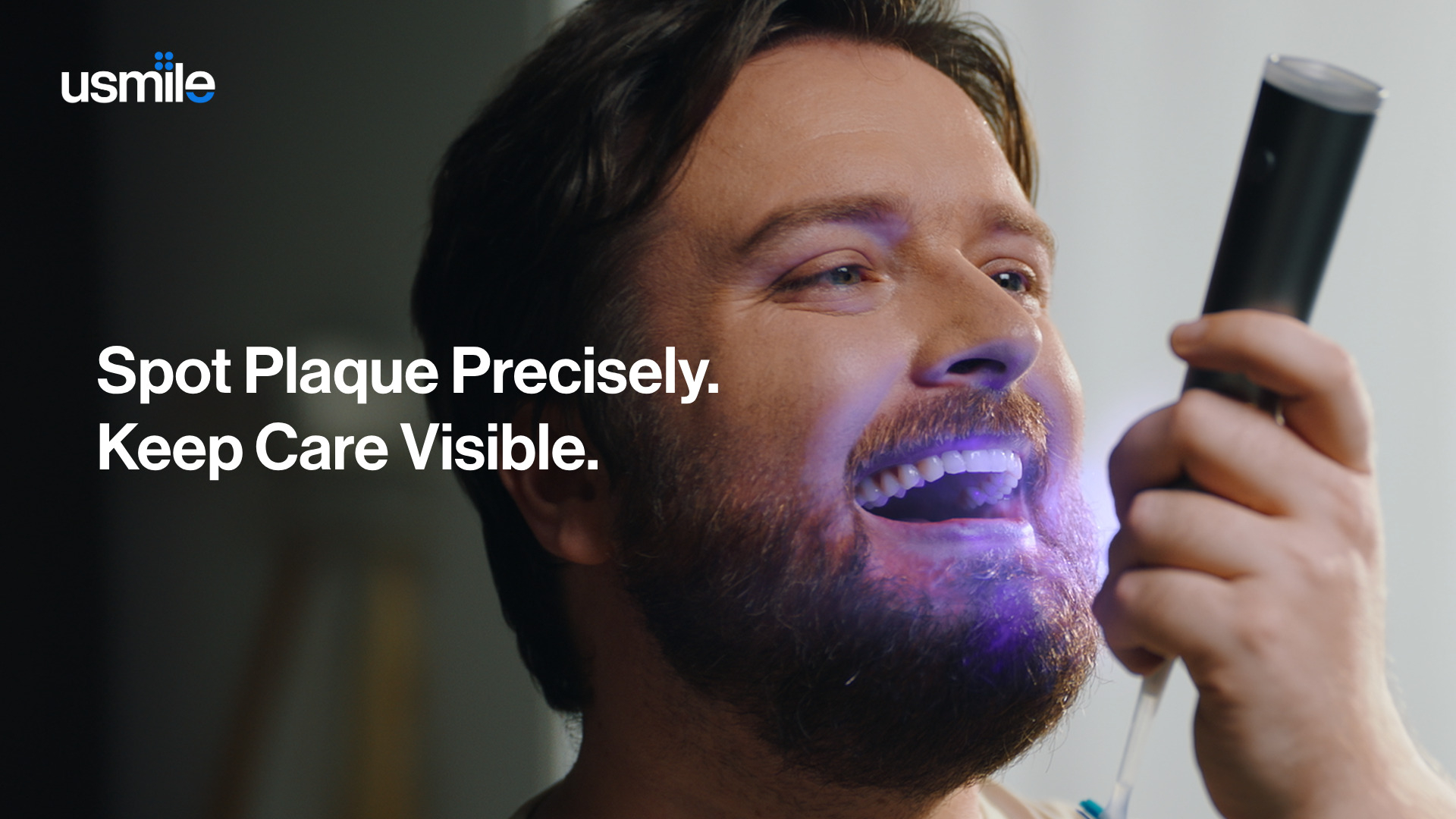
At the center of usmile’s approach is LumaSight™, its oral imaging system. It pairs a 300,000-pixel intraoral camera with six 405 nm violet LEDs to capture plaque-associated fluorescence on the tooth surface. The optical principle is established, but adapting it to a consumer product presents a different engineering challenge. Dental professionals work in controlled environments with specialized instruments and patients whose positions can be adjusted. A toothbrush has to produce usable images in the hands of someone standing in front of a mirror, without requiring professional knowledge or turning a daily routine into a clinical procedure.
The mouth is an unforgiving imaging environment. Space is limited, saliva and enamel create reflections, and the tongue and cheeks can obstruct the camera. Distance and angle change continuously, meaning two images of the same tooth can appear substantially different after a relatively small shift in position or illumination. For that reason, the first technical problem is not analyzing an image but acquiring one that can be analyzed reliably. usmile developed a guided process that divides the mouth into five zones and leads the user through a repeatable scanning sequence. The software evaluates the resulting frames, associates them with the relevant area and asks for another scan when reflections, distance or obstruction make the input unsuitable.
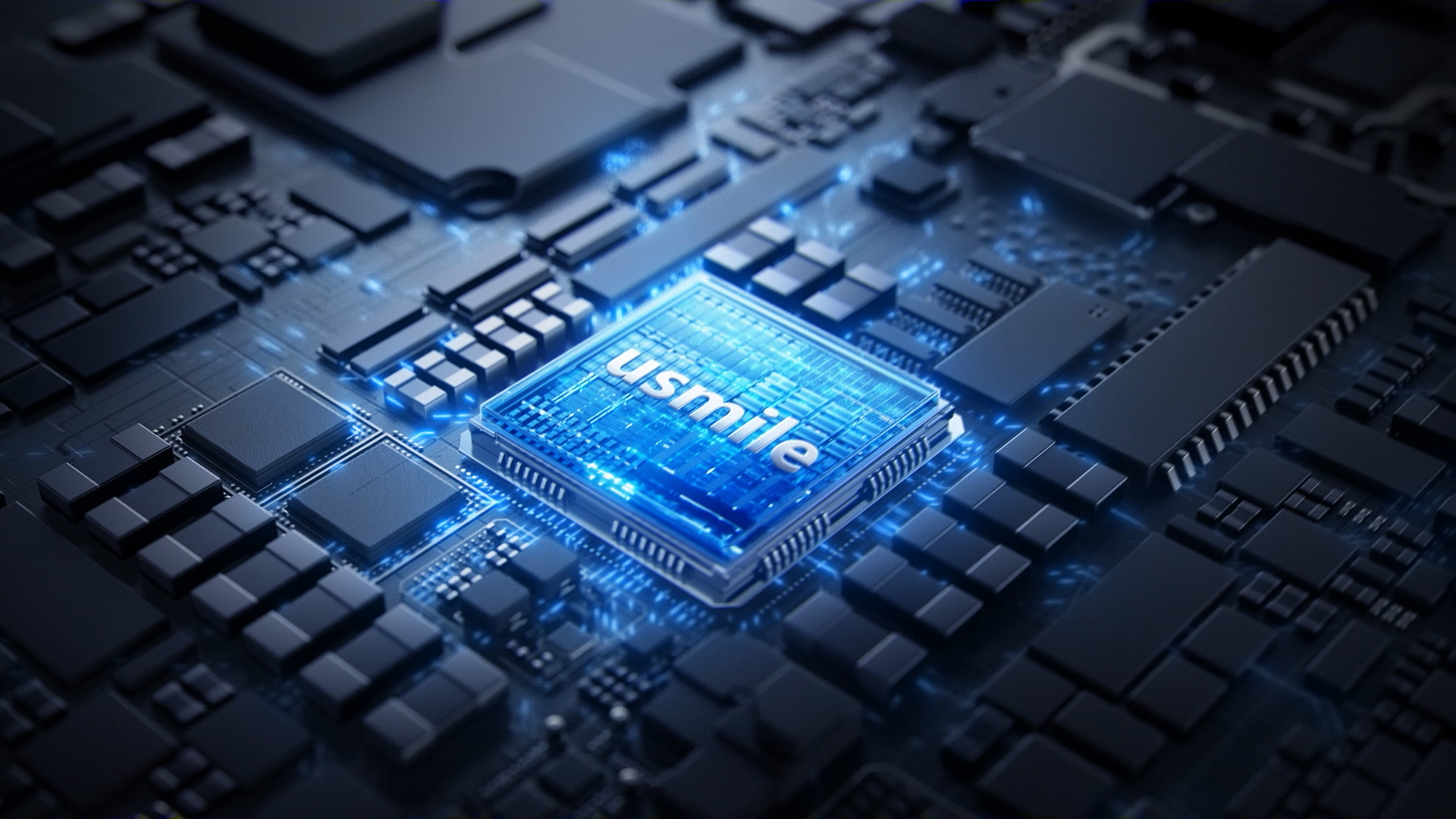
Once an image has been captured, usmile’s image-analysis system identifies individual teeth and matches visible features with predefined categories. The company says the system was developed over six years using approximately 2.18 million tooth images and samples. The analysis runs through a convolutional neural network on the device, supported by approximately 0.5 TOPS of local computing capacity. That figure is modest compared with the processing power of a smartphone, but it has to operate inside a sealed toothbrush handle alongside an imaging system, display, battery and sonic motor.=
Running the model on the device allows the D50 to provide its primary visual feedback without Wi-Fi or a continuous connection to a remote service. The toothbrush connects to its companion app through Bluetooth, but the information needed during the current session is processed and displayed on the handle. This architecture also reflects a product decision about timing. If the system identifies an area that may require more cleaning, the information is most useful before the user has rinsed, put the toothbrush away and moved on. “The moment for action is very short,” Jason said. “While the user is still holding the toothbrush, the result can change what they do next. Once the session is over, the same information becomes something they may look at later or ignore.”
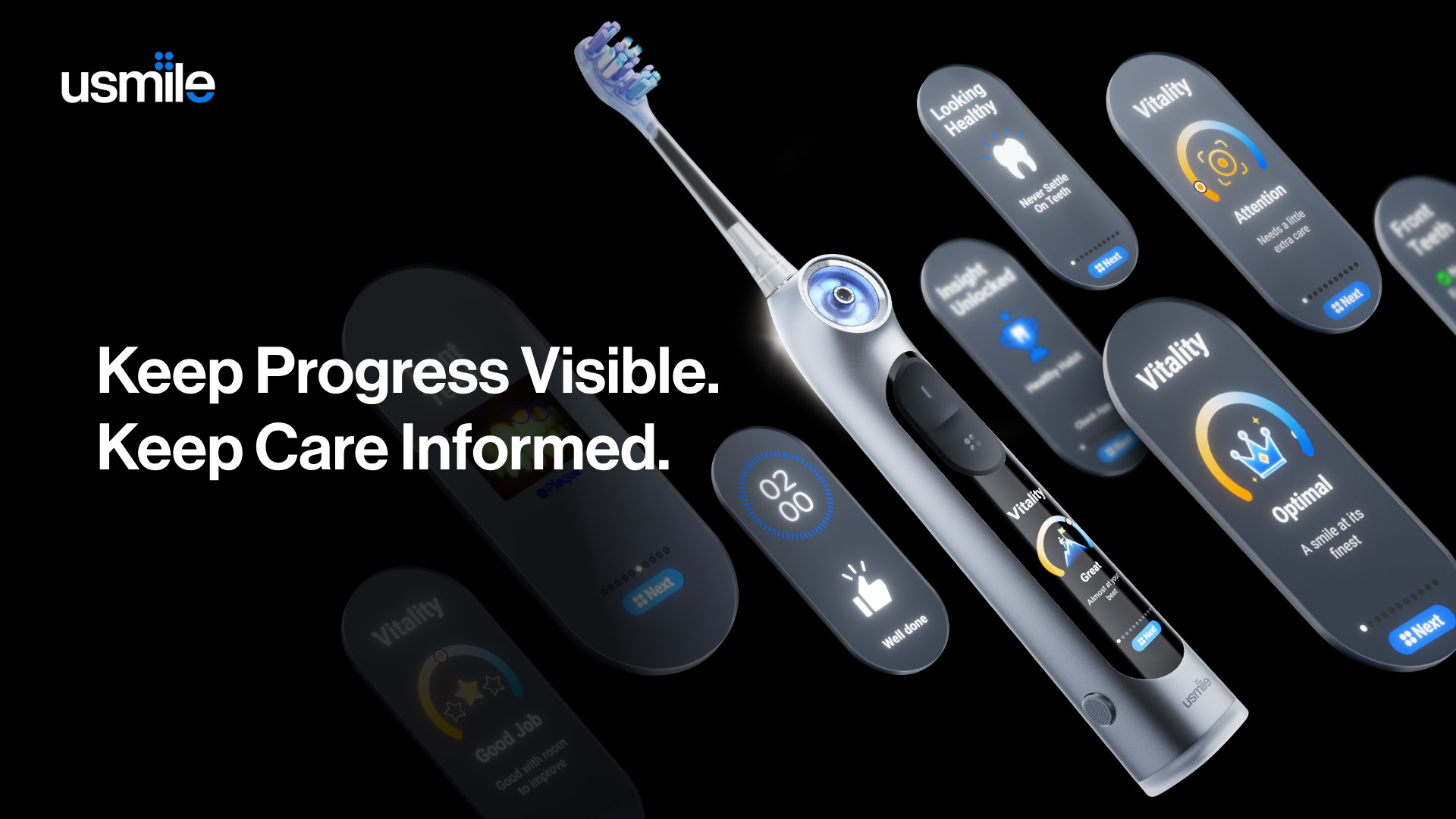
The D50 therefore divides information between two interfaces. A 142-by-428-pixel display on the handle provides immediate guidance, while the app holds detailed images, historical comparisons and longer-term reports. The distinction is less about screen size than time scale. The handle supports a decision within the current brushing session; the app is intended to reveal patterns that become meaningful across days or weeks. Instead of reproducing the phone experience on a smaller display, usmile is using the handle to shorten the distance between seeing a result and acting on it.
Visual information alone, however, cannot establish where the toothbrush moves after an image has been captured. usmile combines LumaSight™ with a six-axis inertial measurement unit that uses acceleration and rotation data to estimate the orientation and movement of the handle. Motion intelligence helps locate the brush, while visual intelligence interprets the tooth surface. A motion sensor can estimate that a user spent time in a particular area but cannot see whether plaque-associated fluorescence remains. A camera can reveal a visible signal, but that image becomes less actionable if the device cannot connect it to the correct location. In D50, the two systems feed into Snipe Mode, which helps guide the user back to an area that may require more attention.
This interaction reveals the larger technical proposition behind the D Series: the image should not end as an image. It has to move through a sequence of illumination, capture, location, analysis and action. “The camera is how we obtain evidence,” Jason said. “It is not the final product value. If the user only receives another picture of their teeth, the system has not finished its job.” That requirement separates a visual-care system from a camera added primarily for demonstration. The usefulness of the technology depends less on whether it can display the inside of the mouth than on whether it can turn that information into a clear next step.
Packaging the system inside a toothbrush also creates a dense set of physical compromises. The camera requires a clear optical path, while the handle must remain sealed against water and toothpaste residue. The processor has to analyze images without generating excessive heat, and the battery has to support the violet LEDs, display, motor and computing hardware. usmile says the D50 can operate for up to 80 days between charges, depending on usage, and charges through USB-C rather than a dedicated base. Jason said the team removed the stand after deciding that a product with extended battery life did not need to occupy a powered dock every day.
A more consequential compromise concerned the scanning process. More frames, tighter positioning requirements and a longer scan could produce more detailed information, but they would also make the feature less likely to survive daily use. usmile chose a five-zone process that prioritizes repeatability and speed over the detail expected from professional equipment. That decision defines both the system’s usability and its medical limits. The technology can show plaque-associated fluorescence and help identify surfaces that may benefit from additional cleaning, but it does not diagnose cavities, periodontal disease or other oral conditions.
According to Dr. Ophelia, usmile’s chief dentist, an oral image captured at home should be treated as a limited visual record rather than a clinical conclusion. A photograph shows a visible surface from one angle under a particular source of light. It cannot provide the information obtained through X-rays, periodontal probing, palpation, professional cleaning or a patient’s medical history. Restorations, staining, saliva and differences in tooth structure can also affect what appears in an image. “The value of home imaging is not that it allows someone to diagnose themselves,” she said. “It can help a person see a location that is difficult to inspect in a mirror, record a visible change and communicate more clearly with a dentist or hygienist.”
That boundary influences both the image-recognition system and the way its findings are presented. A consumer device has to distinguish between identifying a visible area worth attention and assigning a disease label. It also needs to acknowledge when the image quality is insufficient instead of converting uncertainty into a confident-looking result. Used within those limits, home images may make professional guidance more specific. They can help patients understand which surfaces a hygienist is referring to or describe when a visible change first appeared. They do not replace an examination, and symptoms such as pain, swelling, persistent bleeding, trauma or a rapidly changing abnormality still require professional assessment.
usmile is applying the same imaging foundation across more than one form factor. The D50 integrates visual feedback into daily brushing, while the D-lite OralCam uses a smartphone as the interface for more deliberate oral observation and record management. The products operate at different frequencies and serve different tasks, but both rely on the same broader process: illuminate the tooth surface, capture the image, identify the location, analyze the visible information and present it in a form the user can understand.
This suggests that usmile does not see LumaSight™ as a feature limited to one toothbrush. It is being developed as a reusable technology layer for a wider oral-care system. Whether consumers ultimately want that layer in their daily routines remains an open question. Oral imaging introduces more interaction than a conventional toothbrush, and even technically capable health features can lose their appeal once the initial curiosity fades. The system has to provide enough useful information to justify that interaction without encouraging users to check constantly or mistake visual guidance for medical certainty.
Smart toothbrushes have spent years becoming more accurate at describing how people move their hands. usmile is working on the next part of the problem: giving oral-care devices a way to examine the visible result, understand where it came from and guide what happens next. The D50 is the first complete implementation of that idea, but the larger development is the visual intelligence system behind it—and the possibility that the future of smart oral care will be measured not only by the action taken, but by the evidence left on the teeth.
About usmile
Founded in 2015, usmile is an oral health technology company moving everyday oral care beyond basic cleaning toward a more visible, intelligent and targeted approach. Combining oralcare expertise with OralCam imaging, AI-powered recognition and analysis, intelligent sensing, adaptive brushing systems and guided interdental cleaning, usmile creates intuitive products for visualized brushing, personalized cleaning guidance, and portable and at-home water flossing. By making oral conditions and cleaning needs more visible, understandable and actionable, usmile helps adults and families move from reactive care toward prevention-first oral health — setting a new benchmark for the future of oral care. For more information, visit usmile.com.
Disclaimer
The usmile D50 OralCam and LumaSight™ technology are intended strictly for general oral hygiene educational and behavioral guidance. They are not medical devices and are not intended to inspect, diagnose, treat, cure, or prevent any oral disease, including dental caries or periodontal condition. Visual feedback should not replace routine clinical examinations, professional cleanings, or diagnostic procedures (such as dental X-rays). Always consult a licensed dentist or qualified oral healthcare provider for medical advice or if you experience pain, bleeding, or other persistent symptoms.
Media Contact
Charlene Fung
Global Brand Manager, usmile
fengmd@starspulse.com
+86 136 0961 0624
SOURCE: usmile


