The only comprehensively evidence-based education platform in fitness, performance, and physical medicine; unprecedented levels of accuracy and effectiveness.
NEW YORK, NY, UNITED STATES, September 18, 2026 /EINPresswire.com/ — Snippet from Updated Article: Long Femurs and Squat Form: Why the “Long Femur” Myth Is Wrong
Related Article: Squat Depth Recommendations: Based on All Available Research
Related Article: Circuit Training for Hypertrophy, Strength, and Power?
Brookbush Institute’s updated review of 25 studies finds that femur length cannot be reliably measured outside of medical imaging, varies far less between adults than commonly claimed, and demands only a few degrees of ankle mobility that most people can train in weeks.
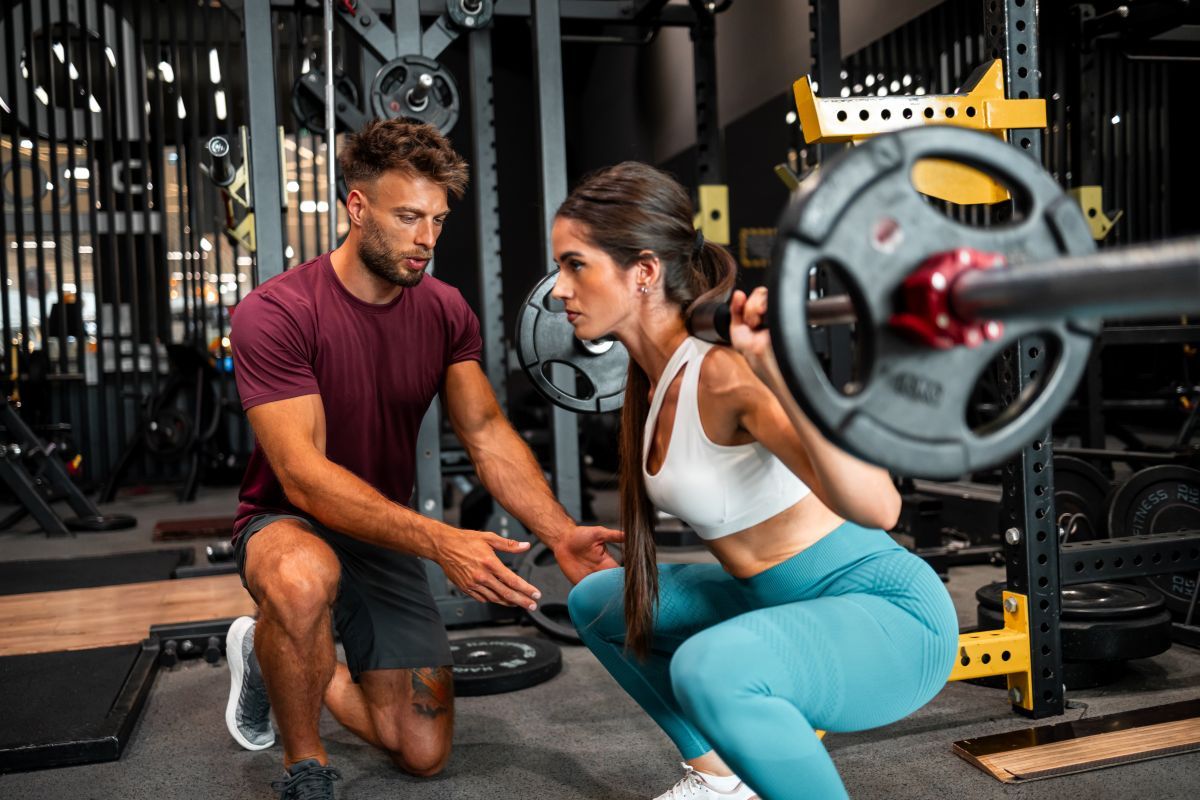
A popular explanation for a difficult squat is the “long femur”: the idea that a long thigh bone forces excessive forward lean, limits depth, or causes the lower back to round. An updated systematic review from the Brookbush Institute finds the explanation does not hold up, and that the tests used to diagnose it are less accurate than the trait they claim to measure.
The review synthesized 25 studies and added a geometric model. Its central finding is that the error in measuring femur length by hand is larger than the entire range of femur-length variation in the population. When expert examiners were checked against medical imaging, they missed the top of the thigh bone by about 2.4 cm on average, while the full range of femur length among adults of the same height was only about 3.7 cm. In practical terms, the tape-measure and eyeball tests circulating online cannot tell any individual whether their femur is long, average, or short.
The review reports three additional findings:
– Human proportions vary little. Measured directly from the bone, the femur was 26.5% to 27.0% of standing height, and 95% of adults of the same height had femurs within about 4 cm (1.5 inches) of each other.
– Even the rarest long femur costs only a few degrees at the ankle. A geometric model demonstrated that the most extreme femur proportion documented (about 1 in 300 adults) required only 4 to 6 additional degrees of ankle dorsiflexion to reach full depth.
– Ankle dorsiflexion, not femur length, predicted squat form, and it can be trained. In the research, no measure of bone proportion correlated with trunk position during loaded squats, while ankle dorsiflexion did. Integrated, multi-week mobility programs increased ankle dorsiflexion by 5 to 7 degrees, more than any femur in the population demands, and maintained the increase at three-month follow-up.
“A relatively fixed skeletal trait was being blamed for a different problem that is actually measurable, trainable, and usually the ankle,” said Dr. Brent Brookbush, DPT, founder of the Brookbush Institute. “The math is not close. The extra demand from even the longest femur is smaller than what a person can add to their ankle mobility in about five to eight weeks.”
The review also cautions that common workarounds for a suspected long femur, such as heavily widening and turning out the stance, reduce what one exercise demands without changing the underlying limitation, and may carry their own risks. It recommends assessing and correcting ankle dorsiflexion before attributing squat form to skeletal structure.
The full updated article and systematic review, “Long Femurs and Squat Form: Why the ‘Long Femur’ Myth Is Wrong,” is available at brookbushinstitute.com/articles/femur-length-and-squat-form.
Brent Brookbush
Brookbush Institute
Support@BrookbushInstitute.com
Visit us on social media:
LinkedIn
Instagram
Facebook
YouTube
TikTok
X
Other
Legal Disclaimer:
EIN Presswire provides this news content “as is” without warranty of any kind. We do not accept any responsibility or liability
for the accuracy, content, images, videos, licenses, completeness, legality, or reliability of the information contained in this
article. If you have any complaints or copyright issues related to this article, kindly contact the author above.

Media gallery