
Key Takeaways
- Side-by-side cockpits give instructors a clearer view of a student’s scan, control inputs, and decision-making, making early correction possible before an upset develops
- Choosing between tandem and side-by-side aircraft comes down to matching the airplane’s layout to the specific training objective rather than picking the airplane with the largest aerobatic envelope
- An intercom failure carries very different risks depending on cockpit layout
- Cockpit design shapes upset recovery training as much as aircraft capability, since communication discipline determines how well lessons transfer
Loss of Control In-flight remains one of the leading causes of fatal accidents in aviation, which is exactly why Upset Prevention and Recovery Training, commonly called UPRT, has become such a critical part of building a safe, capable pilot. Before a student ever pulls back on the stick during an upset scenario, one basic design choice already shapes how much they will learn: whether the aircraft seats instructor and student side by side or one behind the other.
Why Seating Layout Shapes UPRT Success
Cockpit layout might seem like a minor detail compared to horsepower, roll rate, or aerobatic category. In reality, it changes how instruction happens in real time. A student wrestling with disorientation, a steep bank, or an unfamiliar attitude needs immediate, clear guidance, and the physical arrangement of the cockpit either helps or hinders that connection.
Matching the aircraft to the objective, rather than defaulting to whichever airplane looks the most impressive, separates thoughtful UPRT programs from the rest.
Side-by-Side: Built for Instructor Insight
A side-by-side cockpit puts the instructor and student on equal footing, literally. Sitting next to one another means the instructor sees the same instrument panel, the same horizon, and the same outside references the student sees. That shared perspective turns instruction into a continuous conversation rather than a series of guesses about what the student might be doing wrong.
Catching Mistakes Before They Escalate
The real value of this layout shows up in the moments before a mistake becomes a real problem. An instructor sitting beside a student can immediately tell whether the student is scanning outside, fixating on a single instrument, reaching for the wrong checklist, or starting to feel overwhelmed. That visibility allows correction to happen while the airplane is still on its intended flight path, altitude, and airspeed, instead of after those parameters have already slipped.
Where This Layout Excels Beyond Aerobatics
Side-by-side seating pays dividends well beyond upset training. Instrument work, cross-country flights, and scenario-based lessons all benefit from an instructor who can observe:
- Instrument scan patterns and how a student prioritizes attention across the panel
- Avionics workflow, including how confidently a student manages navigation and automation
- Chart use and checklist discipline during high-workload phases of flight
- Radio management and the clarity of a student’s communication habits
- Decision-making as a scenario unfolds, rather than just the outcome
That range of observable detail is why side-by-side seating remains the default choice for most primary, instrument, commercial, and instructor training. Coaching becomes more precise, and instructors spend less time correcting the aftermath of a mistake and more time preventing it in the first place.
What UPRT Actually Requires
Before comparing cockpit layouts any further, it helps to define what UPRT is actually trying to accomplish. Too many pilots picture UPRT as simply flying more aggressive maneuvers, when the real goal runs much deeper.
Prevention, Recognition, and Recovery Defined
UPRT breaks down into three connected skill areas. Prevention involves understanding the flight envelope well enough to recognize when an airplane is drifting toward trouble. Recognition means catching the early signs of a developing loss-of-control threat, such as inappropriate control inputs, poor energy management, or the first hints of spatial disorientation. Recovery is the disciplined, practiced set of actions that brings the airplane back to controlled flight once an upset has occurred.
The FAA’s guidance on UPRT, found in Advisory Circular 120-111, reflects this same structure. It calls for theoretical knowledge instruction, flight training device work, and in-flight instruction covering concepts like manually controlled slow flight, loss-of-reliable-airspeed scenarios, and upset-recovery maneuvers appropriate to the aircraft and approved course. None of that requires an unlimited-category aerobatic airplane to teach effectively.
Why a Bigger Envelope Isn’t Automatically Better
It is tempting to assume the airplane capable of the most extreme maneuvers must deliver the best training. That logic breaks down once the actual learning objectives come into focus. Many of the highest-value UPRT lessons involve low-energy awareness, angle-of-attack management, load-factor recognition, and sound decision-making, all of which can be taught effectively within a carefully managed, aircraft-appropriate envelope.
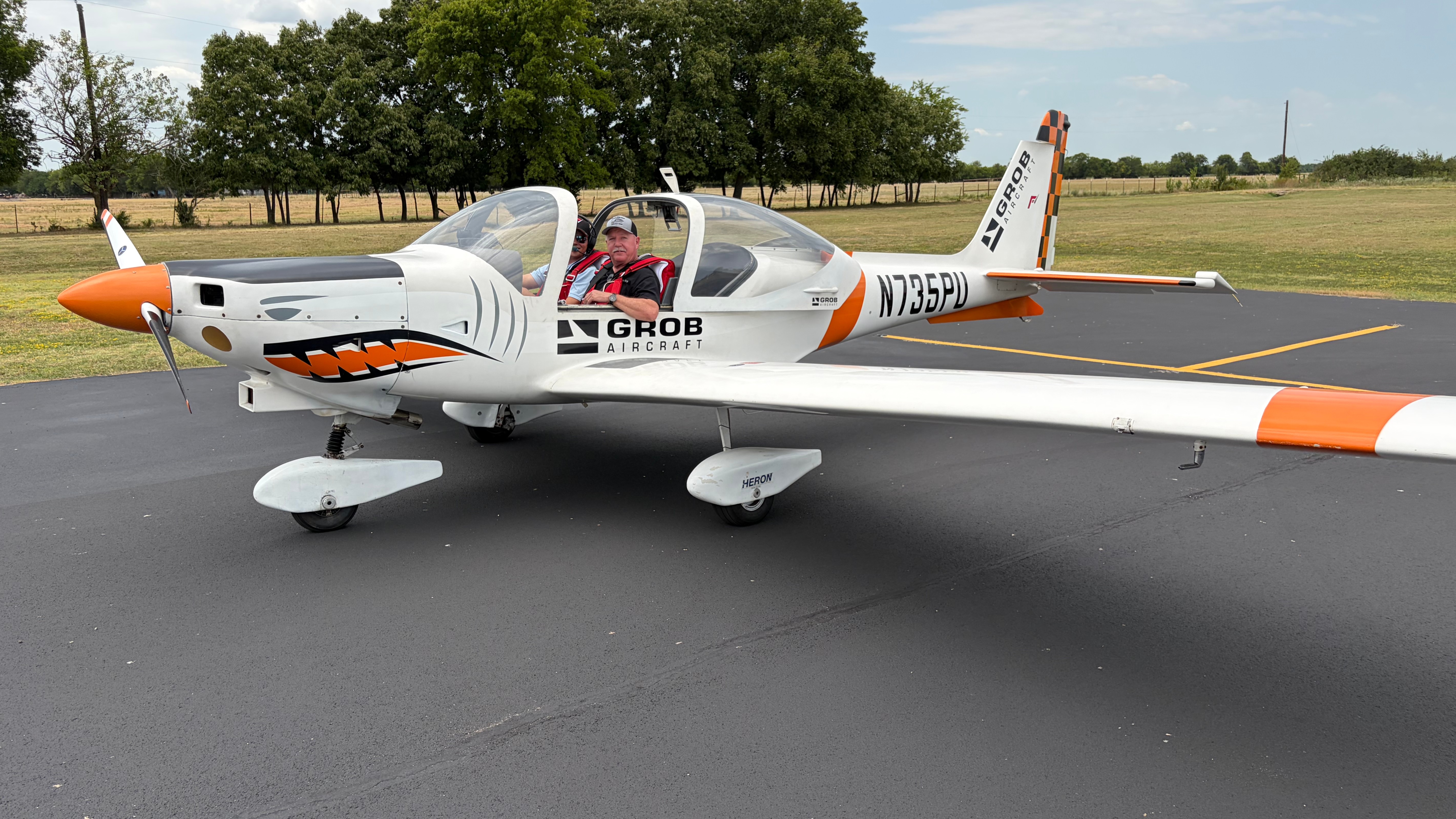
The Grob 115D2 and 115E illustrate this balance well. These side-by-side aircraft occupy a useful middle ground between conventional primary trainers and specialized tandem aerobatic airplanes. Their side-by-side seating preserves strong instructor visibility of student technique, while their approved basic-aerobatic capability supports a more expansive maneuvering curriculum than a typical trainer offers. A Grob operated within its approved limitations is not meant to replace an unlimited aerobatic airplane, but it can teach prevention, recognition, and disciplined recovery without sacrificing the instructional advantages that come from sitting next to a student.
Tandem Aircraft’s Advanced Maneuvering Edge
Tandem aircraft earn their reputation for a reason. Airplanes like the Extra 300, Super Decathlon, and Pitts offer higher roll rates, larger maneuvering envelopes, and sustained inverted flight capability that most side-by-side trainers cannot match. That expanded envelope opens the door to more aggressive all-attitude maneuvering and exposure to energy states a student is unlikely to encounter in a conventional trainer.
The Extra 300L stands out as a strong example of this specialization. As an unlimited-category aerobatic aircraft, it appears in certain upset-training programs specifically because of its controllability and maneuverability at the edges of the flight envelope, qualities many instructors view as central to effective upset recovery work. For advanced aerobatics, spin training beyond the basics, or preparing pilots for high-performance or military-style upset exposure, a tandem airplane can be the right tool for the job.
The Hidden Risk of Losing the Intercom
Every UPRT flight depends on clear communication between instructor and student, and tandem seating introduces a specific vulnerability worth understanding before ever stepping into that cockpit. When two people sit one behind the other, their view of the airplane, the horizon, and each other’s actions is fundamentally limited compared to sitting side by side.
Ambiguous Authority in a Split-View Cockpit
Tandem occupants often have different views of the horizon, the panel, and outside references such as traffic or terrain. During a high-workload maneuver, that difference in perspective stays manageable as long as communication remains intact. The trouble starts if the intercom fails mid-maneuver and the crew has not explicitly planned for that possibility. Both occupants may believe they need to take control at the same moment, creating what is best described as ambiguous authority, a situation where neither pilot is entirely sure who is actually flying the airplane.
Why Side-by-Side Cockpits Handle Failures Better
A side-by-side cockpit does not eliminate the danger of an intercom failure, but it significantly reduces the stakes. Because instructor and student can see each other’s faces, hands, and body language, they can rely on gestures, eye contact, or prebriefed visual signals to stay coordinated even without voice communication. The instructor can also more easily judge whether the student remains in control or needs immediate assistance, simply by watching their posture and control movements.
A failure that might create genuine confusion in a tandem cockpit often becomes a manageable inconvenience in a side-by-side one.
Matching Aircraft to Training Objectives
None of this means one layout is universally superior. The smarter approach treats cockpit configuration as a tool selected to fit the lesson at hand. A student working through primary training, instrument procedures, or foundational UPRT concepts will typically get more out of a side-by-side airplane where the instructor can watch, coach, and correct in real time.
A pilot ready to push into advanced aerobatics, high-energy upset scenarios, or maneuvers that demand a larger envelope will likely benefit more from a tandem aircraft built specifically for that purpose. The key is asking what a given lesson is actually trying to teach before choosing the airplane, rather than assuming a single aircraft type can serve every stage of training equally well.
Cockpit Layout Decides the Better Lesson
Choosing between tandem and side-by-side trainers ultimately comes down to a simple question: what is this specific lesson supposed to accomplish? Side-by-side aircraft offer instructors a front-row seat to a student’s decision-making, communication habits, and technique, making them an excellent home base for most UPRT fundamentals. Tandem aircraft bring capability that some advanced maneuvers genuinely require, provided the crew treats communication planning as seriously as the flying itself.
Aspiring professional pilots who understand this distinction walk into any training aircraft with clearer expectations and sharper questions for their instructors. Before booking an UPRT lesson, ask an instructor which cockpit layout matches the specific skills on the day’s syllabus, since that single question often reveals more about training quality than the airplane’s paint scheme ever could.
Flight College
+1 844 321 5679
200 Silent Wings Blvd
Hangar G1
Terrell
Texas
75160
United States


