Educational Resource Addresses Early Spring Pest Activity and Prevention Methods
Polk City, United States – February 18, 2026 / Sutter Lawns /
Educational Resource Helps Central Iowa Homeowners Understand Lawn Pest Biology
Central Iowa homeowners often discover lawn pest damage after weeks of hidden feeding activity has already weakened their turf. A new educational guide on Iowa lawn pests from Sutter Lawns addresses this timing challenge by explaining when common pests become active and how to recognize problems before visible brown patches develop. The resource covers grubs, chinch bugs, billbugs, sod webworms, and armyworms, providing practical information about their life cycles and the specific conditions that allow pest populations to establish in Iowa lawns.
When Soil Temperatures Rise, Pest Activity Begins
Iowa’s transition from winter to spring creates unique conditions that favor lawn pest activity earlier than many property owners expect. Grubs that overwinter deep in the soil profile begin migrating back toward grass roots when temperatures at the two to four inch depth reach just 40 to 45 degrees Fahrenheit. This upward movement often occurs while surface frost still exists, meaning damage begins before lawns show visible growth.
Surface feeding insects follow similar patterns. Chinch bugs and billbugs overwinter as adults in protected locations within lawn thatch or nearby landscape beds. These insects become mobile and begin feeding when daytime temperatures consistently reach the mid 40s to low 50s. The combination of fluctuating temperatures, variable moisture from snowmelt, and stress placed on grass during dormancy-to-growth transitions creates vulnerability that pests exploit readily.
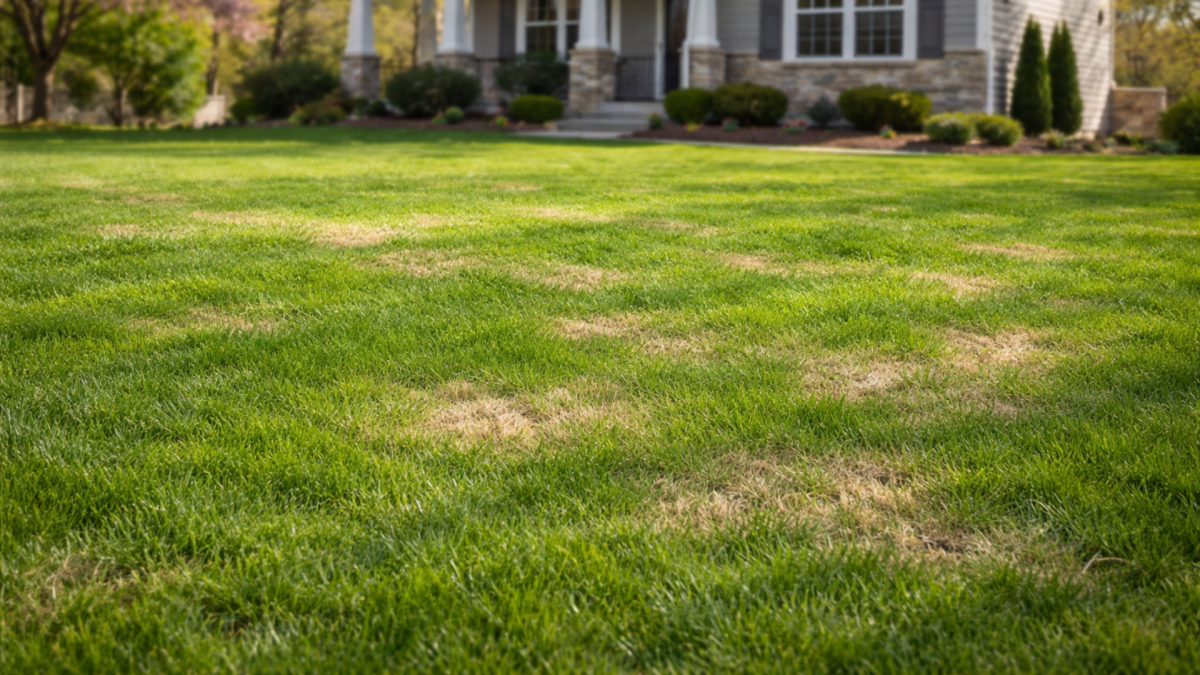
Property owners who wait for obvious damage signals before addressing pest threats face established populations that have already reproduced and caused substantial root system harm. Brown patches visible in May or June represent feeding activity that began weeks or months earlier, making recovery slower and more costly than prevention would have been.
Integrated Programs Address Multiple Pest Threats
Sutter Lawns offers grub control, perimeter pest control, mosquito control, chigger control, and flea and tick control as part of comprehensive property care programs. These services address both turf-damaging insects and pests that affect outdoor comfort and safety. Lawn care programs integrate pest management with fertilization, weed control, and treatments for lawn disease, creating conditions that help turf resist pest pressure while directly addressing pest populations.
Programs also include core aeration, overseeding, power seeding, topdressing, and lawn seeding services that strengthen root systems and improve turf density. Thicker, healthier grass tolerates minor pest feeding without showing damage and recovers more quickly when pest pressure increases. Landscape maintenance and landscape bed pre-emergent treatments extend protection beyond turf areas, addressing pests that move between ornamental beds and lawn spaces.
The timing of these services follows pest biology rather than calendar convenience. Late winter and early spring applications target overwintering populations before they become active. Mid-spring treatments prevent the next generation of grubs from establishing. Early summer represents a final preventative window before peak egg-laying occurs.
Approach Emphasizes Education and Early Intervention
Sutter Lawns addresses lawn pest management through detailed property assessment and explanation of findings. Technicians identify which pests pose the greatest risk based on site conditions, previous damage patterns, and current population levels. Treatment recommendations reflect actual pest pressure rather than standardized schedules, and homeowners receive clear explanations of why specific interventions matter at particular times.
This educational approach helps property owners understand the biology driving pest activity in their specific location. Different areas within Central Iowa experience varying pest pressure based on soil type, sun exposure, irrigation practices, and surrounding landscape features. A lawn in Ankeny may face different challenges than one in Polk City, even though both properties are relatively close geographically. Sutter Lawns tailors programs to address these site-specific factors rather than applying uniform treatments across all properties.
Regional Knowledge Informs Service Delivery
Central Iowa’s climate creates a relatively narrow window for optimal pest prevention. Late February through early March represents the ideal time to address overwintering pests, yet snow cover and frozen ground often make homeowners hesitant to think about lawn care during this period. Understanding Iowa’s soil temperature patterns and how they relate to pest emergence helps property owners make informed decisions about treatment timing.
Service delivery across Polk City, Ankeny, Grimes, Bondurant, and Johnston accounts for microclimate variations within the greater Des Moines area. Properties near water features, those with significant tree cover, or sites with southern exposure may experience pest activity several weeks earlier than properties in other locations. Monitoring soil temperatures and tracking pest emergence patterns across the service area allows for responsive scheduling that matches biological reality rather than fixed calendar dates.
Relationship-Based Service Model Supports Long-Term Results
Sutter Lawns operates on the principle that effective lawn care requires understanding each property’s unique characteristics and the homeowner’s specific goals. Technicians maintain detailed records of previous treatments, observed pest activity, and turf response patterns. This information guides future recommendations and helps identify potential problems before they become severe.
Communication focuses on helping homeowners understand what’s happening in their lawn and why particular interventions make sense at specific times. When pest activity is detected, local lawn care professionals explain findings clearly and discuss available treatment options. Property owners receive follow-up information about what to expect after treatment and signs that would indicate additional intervention might be needed.
Educational Resources Address Common Homeowner Questions
The guide addresses frequently asked questions about lawn pest identification, damage patterns, treatment timing, and the effectiveness of preventative versus reactive approaches. It explains why homeowners spend two to three times more addressing established pest damage than they would have spent preventing it, and how preventative programs use lower application rates while achieving better results.
Information about early warning signs helps property owners conduct basic lawn monitoring between professional visits. Subtle color changes, increased wildlife activity, grass that pulls up easily, and presence of adult insects all indicate potential pest problems before obvious damage appears. Regular observation allows for early detection when intervention is most effective and least costly.
Sutter Lawns remains available to answer questions about pest activity, treatment options, and optimal timing for preventative services. Property owners can reach the company at 515-329-3154 or visit the website at sutterlawns.com to learn more about integrated pest management programs designed for Central Iowa conditions.

Contact Information:
Sutter Lawns
NW 126th Ave
Polk City, IN 50226
United States
Contact Team
https://sutterlawns.com/
Original Source: https://sutterlawns.com/media-room/


